
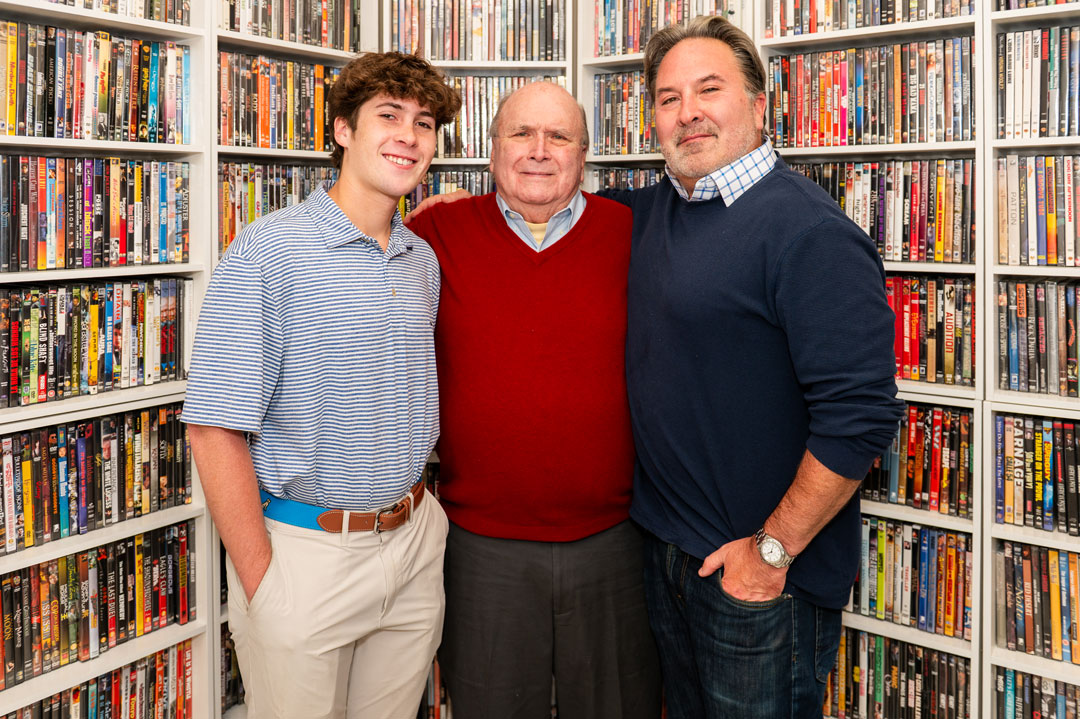
For more than five decades, David A. Cook built a film collection that spanned continents, genres and eras — a collection assembled not simply out of passion, but as a teaching and research tool that helped shape generations of film students and informed one of the most influential film history textbooks ever published.
Now, Cook has given his extraordinary collection a new home at the University of Mississippi, where it will serve as a lasting resource for students, faculty and film scholars.
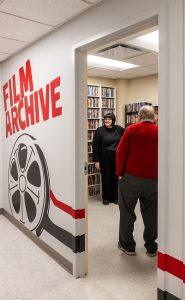
Valued at approximately $250,000, the gift includes thousands of DVDs and Blu-rays, representing the history of world cinema. The collection encompasses landmark works from the United States, the United Kingdom, Europe, the former Soviet Union, India, China, Japan, the Middle East, Latin America and beyond.
“I’ve been collecting films since I began teaching film in the early 1970s,” said Cook, professor of media studies at the University of North Carolina-Greensboro. “I used these films both for research and for teaching, so I always wanted the format with the highest possible resolution available at the time.”
A renowned film historian, former founder and chair of the Film Studies Department at Emory University, and author of the seminal textbook A History of Narrative Film (W.W. Norton; 1981,1990, 1996, 2004, 2016), Cook spent decades carefully curating the collection. Over the years, it expanded into a carefully researched archive of award-winning and historically significant films.
Eventually, however, the professor began thinking about the future.
“As I got older, I realized I wasn’t going to live forever and that I would eventually need to pass the collection on,” he said.
During the COVID-19 pandemic, he prepared detailed descriptions of the collection and approached a number of colleges and universities. While several institutions expressed interest, many already had similar holdings, lacked space or faced logistical challenges. More importantly, Cook wanted the collection to be used — not simply stored away.
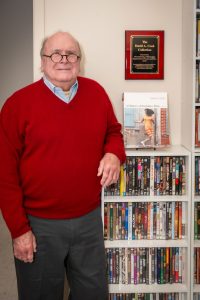
“I didn’t want the collection to become a set of duplicates or something undervalued,” he said. “I wanted it to go to a university that would really use it, appreciate it and treasure it the way I had over decades of collecting.”
An unexpected family connection ultimately led him to Ole Miss.
Cook’s son, Gregory Cook, who works in advertising at CNN, was familiar with the collection and had shared information about it with contacts in both media and higher education. At the same time, Gregory’s son, Colin Cook, enrolled at Ole Miss as a freshman in 2024. During a campus visit, Gregory Cook learned about the university’s growing film program and connected with Sarah Hennigan, interim chair of UM’s Theatre and Film Department.
The conversation quickly revealed a perfect match.
Ole Miss offered the space to house the collection and a program eager to incorporate it into teaching and student learning. Through the efforts of university staff, including Adam Brady, associate director of development, arrangements were made to bring the collection to Oxford.
The move itself was no small task for Brady. An entire 10-foot Ryder truck was needed to transport the collection and loading it required a full day of work. The films, which had occupied roughly 60 percent of Cook’s home, filled the truck almost completely.
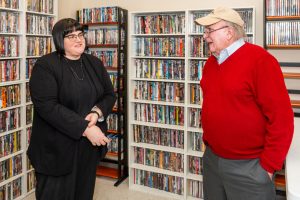
For Ole Miss students, the collection offers something increasingly rare in the streaming era: direct access to physical media. Physical collections help preserve access to films that may disappear from streaming services or become difficult to locate over time. That preservation value is one of the reasons university leaders are thrilled with the gift.
“We’re so grateful to Dr. Cook for this incredibly generous donation,” said Juli Jackson, associate professor of film production and head of the archive committee. “We’ve started putting the systems in place to organize and preserve the collection.
“At a time when so much film history is tied up in constantly shifting digital access, physical media like this remains incredibly important for preservation, teaching and long-term access,” she continued. “It’s already clear this will become a unique and highly valuable resource for our Ole Miss students, faculty and staff.”

For Cook, whose fascination with cinema began in childhood movie theaters and television screenings near Washington, D.C., the collection represents a lifetime devoted to understanding and teaching the art of film.
Among the thousands of titles he collected, one remains especially meaningful.
“The film that most profoundly captured my attention was Citizen Kane,” he said. “I still consider it the greatest film ever made.”
Now, after decades of scholarship, collecting and teaching, Cook’s passion for cinema will continue to inspire new generations. What began as a personal archive has become a shared resource — one that connects Ole Miss students to the rich history of world cinema and ensures that some of film’s greatest achievements remain accessible for years to come.
For more information about supporting the UM Theatre and Film Program, contact Adam Brady, associate director of development, at jab@olemiss.edu or 662-915-1755.
By Bill Dabney/UM Foundation