
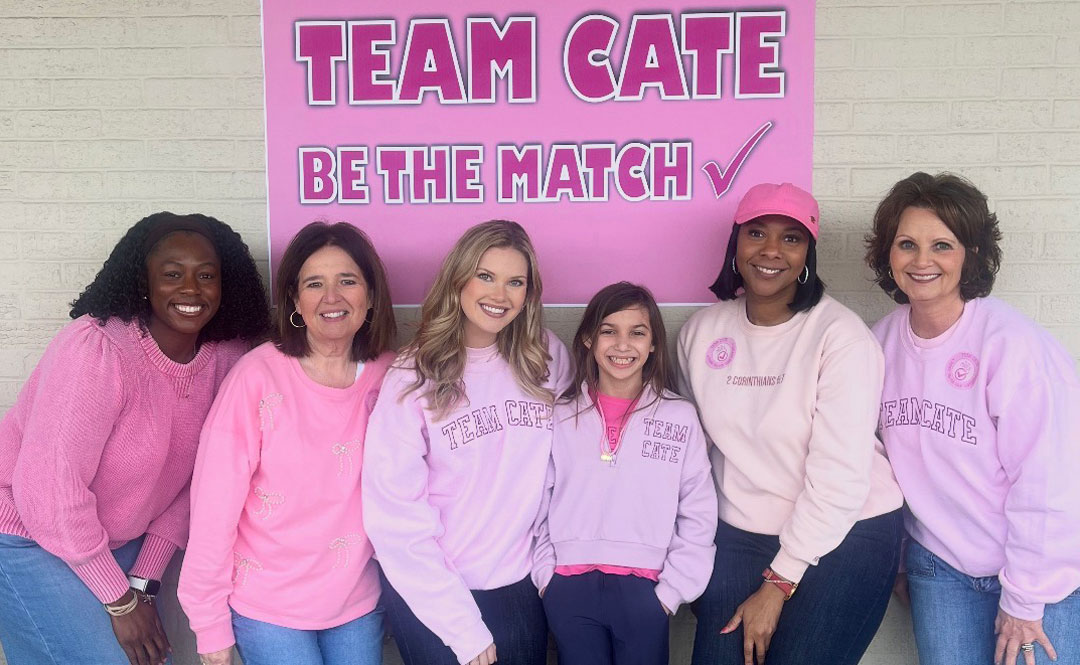
University of Mississippi freshman Ali Hargett has learned about bravery and organization during her first year in college, but not in a class. Instead, she has been watching her 11-year-old sister, Cate, who is in bone marrow failure.
The elder Hargett, a dietetics and nutrition major from Greenwood, Mississippi, is helping lead the way with family and friends in what has become a statewide effort to find a bone marrow donor for Cate.
To find a match, the public is being encouraged to be tested. Anyone between the ages of 18 and 35 can register to receive a free testing kit through NMDP by texting “TeamCate” to 61474. Or, if between the ages of 18 and 55, visit the DKMS website to register as a donor and receive a free kit by mail.
“Cate has struggled with bone marrow failure all of her life,” Hargett said. “This means her body can’t make enough healthy blood cells on its own.
“When some people enter bone marrow failure, they have 20 to 30 people already on the registry and have perfect matches, or they have a perfect match from a relative; but my little sister doesn’t have a relative perfect match, or anybody on the registry.”
It is easy to join the donor registry. All it takes is a swab inside your mouth.
It’s a cause that Jennifer Eastland, Hargett’s godmother, has been involved with for 30 years since her sister’s husband, Jeff, died of cancer at 28 years old.
“If he had lived longer, a bone marrow transplant was planned, so I have been on the registry since 1995,” said Eastland, operations manager at the Center for Manufacturing Excellence.
“It has been a long-time dream and hope of mine to be a donor match to honor Jeff’s memory. I’ve seen donors save lives – a lifelong friend was saved by a bone marrow transplant 10 years ago.”
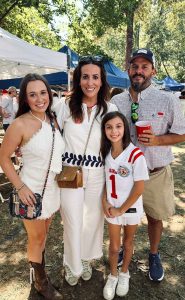
The team is working to increase the donor registry in hopes of finding a perfect match for Cate, who loves to write stories and dreams of becoming a librarian or author.
“Ideally, you want a perfect match, rather than a half match, which I am, because the survival rate is so much higher,” Hargett said.
Doctors recently discovered that Cate developed a mutation in her TP53 gene. When this gene functions properly, it helps prevent cancer and keeps cells healthy. When it is mutated, it is possible that if cancer cells develop, they can multiply uncontrollably and treatments become more complicated.
Cate needs a matching donor before the gene fully mutates, making treatment difficult.
“College-aged donors are in the most needed age group because young, healthy donors give patients the best chance at survival,” Hargett said.
A matching donor would answer prayers for the family.
“When we say our prayers at night, the most serious one Cate ever said was, ‘I just hope I live next year,'” Hargett said. “An 11-year-old girl shouldn’t be having to say that.”
For Eastland, love is also Hotty Toddy.
“Love for our teams, fans, students, alums, professors, the Grove, the campus – anything and everything Ole Miss,” Eastland said. “And if there’s one thing I know that all Rebels have in common, it’s generosity and love for one another, friend or stranger.
“Helping to find a blood marrow donor match for Cate is ‘love your neighbor,’ and in my lifetime of experience, I’ve never met a Rebel who doesn’t embody this message of love.”
By Marisa C. Atkinson/UM MarCom